

I asked myself a question today that felt simple at first, but would not let me answer it lightly:
Who would I become if I stopped doubting myself?
For a few seconds, nothing came.
Not because the answer was not there, but because some part of me had gotten so used to living with doubt that imagining life without it felt unfamiliar. That startled me more than the question itself.
Because somewhere along the way, doubt stopped feeling like a passing reaction and started feeling like part of the furniture. It became so normal, so woven into the texture of how I think, decide, begin, hesitate, explain, postpone, and evaluate myself, that I stopped noticing how much space it was taking.
It speaks in such ordinary language.
Are you sure you can handle this.
What if you get it wrong.
What if you start and cannot sustain it.
What if you embarrass yourself.
What if other people can see the gaps in you more clearly than you can.
It rarely sounds dramatic. That is part of why it stays. It sounds practical. Sensible. Protective. Even wise.
If this question hits something tender in you, the free 30-Day Journaling Challenge can be a gentle place to begin putting language around it.
That is the tricky thing about self-doubt. It does not always arrive as panic. Often, it arrives as caution that never leaves. It disguises itself as thoughtfulness, humility, realism, preparedness. It says it is helping you stay safe, but what it is often doing is teaching you to interrupt yourself before life even gets the chance to answer back.
I think that is what I have been noticing more lately.
Not just that doubt hurts confidence. That is obvious enough. What it really does is more subtle. It changes the timing of your life. It slows your response. It adds negotiation where there could have been movement. It inserts hesitation between instinct and action. It turns decisions into debates. It makes you ask for reassurance from the world before you are willing to stand beside what you already sense.
And when that happens often enough, it becomes a habit.
Not just a feeling. A pattern.
You stop sharing the idea when it is fresh.
You wait until the timing is cleaner.
You soften what you really think.
You overprepare the thing you could have simply begun.
You delay the email, the project, the conversation, the change.
You mistake your own hesitation for evidence that you are not ready.
That kind of doubt is exhausting because it is not loud enough to force a reckoning. It just quietly taxes everything.
It takes ten percent from the decision.
Fifteen percent from the creative impulse.
Twenty percent from the willingness to trust your own read on reality.
And over time, that adds up to a life that feels more negotiated than lived.
So when I asked myself who I would become without doubt, I realized the answer was not really about becoming someone entirely different.
I would still be me.
Same instincts.
Same values.
Same desires.
Same mind.
Same heart.
But I think I would move differently.
I would not spend so much energy trying to secure permission before beginning. I would not require so much proof before trusting what already feels true. I would not keep treating every meaningful step like it needs to be argued into existence.
I would speak sooner.
I would decide with less internal committee work.
I would stop overexplaining the things I know in my body but cannot yet defend perfectly on paper.
I would create with less self-interruption.
I would let more of my life be built by participation instead of pre-clearance.
And maybe that is the part that stays with me most. Self-doubt does not only make you feel smaller. It teaches you to live smaller in advance. It convinces you to reduce yourself before anyone else gets the chance. It asks you to pre-edit the dream, lower the ask, slow the step, quiet the voice, make the idea more reasonable, more digestible, more justified.
It makes you bargain with your own aliveness.
That feels harder to admit than I expected.
Because if I am honest, a lot of the moments I think of as missed opportunities were not dramatic failures. They were quieter than that. Moments where I did not back myself fully. Moments where I let uncertainty speak with more authority than desire. Moments where I treated hesitation as wisdom instead of what it often was: fear wearing a respectable outfit.
And if that happened once or twice, maybe it would not matter so much.
But repeated enough, it becomes a way of living.
A way of standing one inch outside your own life and calling it caution.
I do not want to keep doing that.
Not because I think confidence means becoming fearless or certain or endlessly bold. It does not. And I do not think the opposite of doubt is blind confidence either. I think the opposite of doubt, at least in this context, might be self-permission.
Permission to begin before every part of me agrees.
Permission to choose without total reassurance.
Permission to let the first version be imperfect.
Permission to trust that I can meet myself inside the consequence of a choice, not only before it.
That feels more true than the usual “just believe in yourself” language.
Because I do not always feel like a person who believes in herself in some clean, permanent way. But I do feel like I am becoming more interested in what happens when I stop giving doubt the final vote.
That is a different question.
Not: how do I eliminate doubt forever.
But: what changes when doubt no longer gets to govern the whole room.
I can feel there is a version of me on the other side of that shift.
Not a fantasy self. Not a perfected self. Just a less interrupted self.
A version of me who still feels uncertainty, but does not hand over authorship to it. A version of me who can feel the wobble and still move. A version of me who does not keep using hesitation as her main relationship to potential. A version of me who can hold risk without immediately shrinking the dream to match the fear.
I do not think she is far away, exactly.
I think she appears in smaller moments than I used to notice.
In the email sent before overthinking wins.
In the sentence said without apology.
In the idea shared before it is over-polished.
In the decision made with enough information instead of impossible certainty.
In the willingness to trust that not every next step needs to be guaranteed before it is taken.
Maybe that is how this kind of transformation actually happens.
Not through one dramatic act of confidence, but through repeated moments of self-loyalty. Through tiny acts of non-abandonment. Through choosing not to let fear narrate the entire future before reality has even spoken.
That feels more honest to me than pretending one day I will wake up doubt-free.
I do not think the goal is to become someone who never questions herself again.
I think the goal might be to become someone who can hear the doubt, recognize it, and still decide that her life deserves more than a constant vote of hesitation.
So who would I become if I stopped doubting myself?
Maybe I would become someone less divided.
Someone who wastes less life in rehearsal.
Someone who no longer treats her own instincts like suspicious material.
Someone who lets desire, clarity, and self-respect speak a little louder than fear.
Someone who does not need to become extraordinary overnight, but is willing to stop making herself smaller in advance.
That feels like enough of an answer for today.
Not certainty.
Not a perfect new identity.
Just a quieter and more powerful truth:
A lot of who I could become is already here.
I may just need to stop handing the microphone to doubt every time she tries to speak.
Want to Try This Yourself?
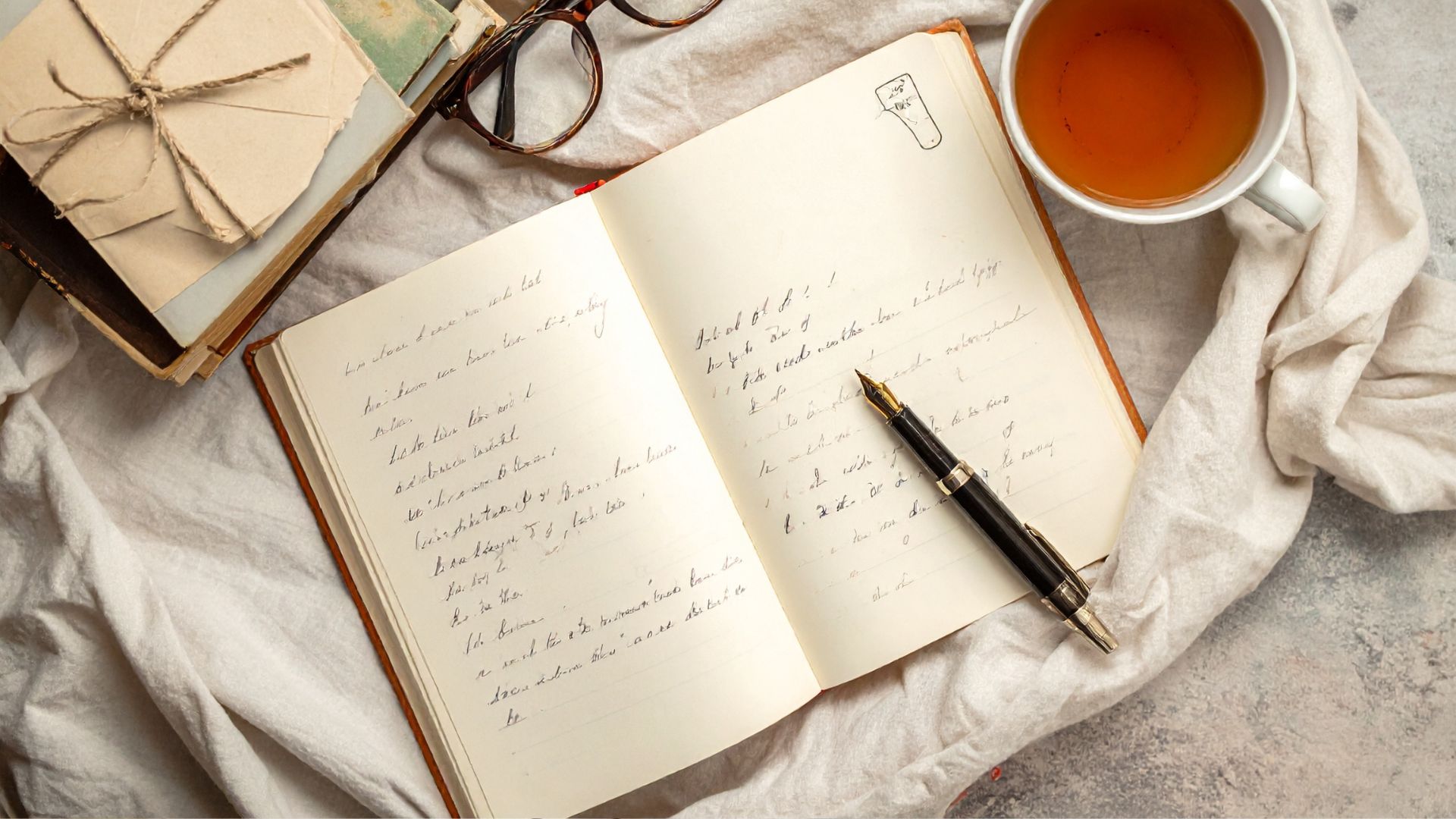
If this prompt opened something in you, sit with it on paper.
Write about the version of you that might emerge if doubt stopped managing so much of your timing, your voice, your decisions, and your self-expression.
You do not need to write from confidence. You just need to write honestly.

And if you want more prompts like this, The Ultimate Self-Discovery Journal was created for exactly this kind of reflection. It is a place to explore the patterns, fears, desires, and identity shifts that shape how you live, and how you might live differently.
You can explore The Ultimate Self-Discovery Journal on the store when you are ready.
Leave a Reply